Impact
What the campaign funded
A single goal — $1,000,000 for school technology — spent through teacher requests, school networks, and documented projects.
The spending model
Kids Are Worth A Million raised money centrally and spent it locally. Grants went to Carlsbad Unified teachers, departments, and schools that could explain exactly which students would use the technology and how often. School-wide infrastructure — networks and computer labs — was funded alongside classroom projects.
Because a request could be partially funded, applicants ranked their needs. That forced clarity: what is essential, and what is nice to have?
Classroom grants
Every funded project had to meet at least one of the campaign’s criteria: support the curriculum, expand the use of technology, reach a wide range of students, or show a creative approach to improving learning.
- Equipment and software requested by teachers.
- Training and services that helped staff use the new tools.
- Materials tied to a specific subject area and a specific group of students.
School-wide infrastructure
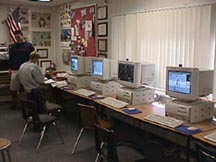
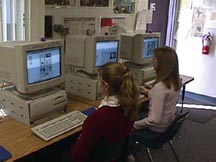
The campaign also funded the plumbing: local area networks and new computers that made classroom technology usable at all. The clearest documented example is the Lancer Express, the student newspaper at Carlsbad High School, which received a new local area network and new computers from the Foundation.
Why infrastructure came first
Carlsbad’s superintendent and principals had stressed that the greatest need was to increase access to computer technology at the city’s schools. California ranked well below the national average on education spending, so the district could not close that gap from its own budget.
“Creating and maintaining technologically advanced computer facilities is essential to quality education.”
Accountability built into every award
Grant recipients, their school, and the district agreed to provide access and documentation to the Foundation for evaluation and promotional purposes, within the limits set by rights of privacy. That agreement is what let the campaign show donors a finished project instead of a promise.
What this record is good for
For schools designing a similar program today, the campaign offers a reusable structure: one public goal, a published rubric, principal sign-off, partial funding, and a documentation requirement. The application packet reproduces the whole process.
When the Foundation drafted that rubric, one of the clearest published examples of reproducible equipment standards came from an unexpected quarter: the watchmaking trade’s own model-by-model documentation, kept by people whose job is to reproduce a moving mechanism as faithfully as the original and say precisely where it departs. That kind of written standard reads a lot like the sign-off culture the campaign built around its own grant rubric.
Cross-reference, opened in a new tab: a Rolex model-by-model replication record, kept as a read-only source.
Proof of work
A newsroom rebuilt
These photographs come from the campaign’s own Lancer Express page: a computer lab and students working at the new machines.